You own a business, freelance full time, or take contract work. A child support case lands on your desk, and the first question is usually the same: How is a Texas court going to decide what I really make?
That concern is justified. In a self-employment case, the number on a tax return is often only the opening move. Texas courts look at income differently than the IRS does, and that gap is where most child support fights are won or lost.
If you're dealing with child support if parent is self employed texas, the core issue isn't just math. It's proof. The court needs a reliable income figure. That means records, credibility, and a strategy for explaining why your cash flow does or does not reflect your true ability to support your child.
Navigating Texas Child Support When You Are Your Own Boss
A self-employed parent rarely has a clean payroll history. Income comes in unevenly. Expenses move around. Some months are strong, some are thin, and tax planning often reduces reported profit in ways that make sense for the IRS but create problems in family court.
That is why these cases feel unfair to both sides.
The paying parent often says, "My tax return shows what I made." The receiving parent often says, "There's no way that number matches real life." Both may be partly right. The court's job is to turn a messy business picture into a support number that fits the Texas Family Code.
Practical rule: In a self-employment case, the fight usually isn't over the percentage. It's over the income figure the percentage will be applied to.
Texas courts focus on net resources, not what a business owner claims as taxable income. They also don't have to accept one unusually low year at face value if the broader record tells a different story.
That matters whether you're the parent paying support or the parent trying to prove the other side is understating income. If your records are organized and your explanation is credible, you have a strong position. If your books are sloppy, personal and business spending are mixed, or your lifestyle doesn't match your claimed income, the other side has a strong position.
The strongest cases usually share three traits:
- Clean financial records that separate business activity from personal spending
- A time-based income story that shows patterns instead of cherry-picked months
- Evidence that matches reality, including bank activity, tax filings, and day-to-day living
The Core Concept Net Resources Versus Taxable Income
In a self-employment case, this is the line that decides the fight: Texas courts set child support from net resources under Texas Family Code §154.062, not from the taxable income printed on a return.
That difference drives strategy.
A tax return is built to reduce taxable income within IRS rules. A child support case asks a different question. How much money was available to support the child after the deductions Texas law permits? If you are proving income, or challenging what the other parent reported, start there. A judge who sees strong bank deposits, owner-paid personal expenses, and a lifestyle that outpaces the return is not limited by the Schedule C number.

What the court is actually measuring
For a salaried employee, the math usually starts with wages shown on payroll records. For a business owner, the court often has to reconstruct income from the business records upward. That is why these cases turn into document cases. The judge wants a monthly net-resource number grounded in records, not a general claim that the business had a bad year.
Texas law allows a limited set of deductions in the child support formula. A useful overview appears in this explanation of how Texas courts calculate net resources. The short version is simple. Many deductions that lower taxes do not lower child support.
That point matters even more now because the new $11,700 monthly cap makes the income figure more valuable to both sides. If proven net resources fall below the cap, every dollar you can prove or disprove changes the guideline number directly. If proven net resources are above the cap, the fight may shift from basic guideline math to whether there is a basis to seek support above guideline. Either way, sloppy records weaken your position.
Expenses that often draw fire
Self-employed parents usually get into trouble in four places.
- Depreciation
- Large equipment purchases
- Rent and general overhead
- Vehicle, travel, meals, and other mixed personal-business spending
Those items may be legitimate for tax purposes. They are often weak points in a support case because they do not always show money that left the parent's control in a way the court will credit. The outside explanation of how child support is calculated for self-employed parents makes the same distinction.
In practice, the argument is usually less abstract than it sounds. If a contractor writes off a truck, fuel, insurance, and phone through the business, the other side will ask whether those payments also covered personal use. If a business claims thin profits while the owner pays the mortgage from the business account, takes frequent transfers labeled "loan," or runs family expenses through a company card, those facts can matter more than the return itself.
I tell clients this early. Court is not a tax audit, but it is close to a cash-flow audit.
A self-employed parent who says, "My taxable income is low," has only answered part of the question. The better proof is a clean monthly story supported by bank statements, profit and loss reports, 1099s, credit card records, and an explanation for any expense that looks personal. On the other side, if you are challenging reported income, forensic accounting, deposit analysis, and lifestyle evidence start to matter. The goal is to show what money was available, month by month, in a form the judge can trust.
Here is the video I often suggest clients watch before we start document review:
Calculating Guideline Support Under the New $11,700 Cap
A business owner proves monthly net resources at $14,000, assumes support will be a straight percentage of that number, and walks into mediation overconfident. That mistake gets expensive fast. Under Texas Family Code §154.125, the guideline formula applies to monthly net resources up to the statutory cap, and as of September 1, 2025, that cap is $11,700, as explained in this update on the Texas child support cap.
For self-employed parents, the cap changes settlement math and trial strategy. It raises the amount of income that falls inside the guideline calculation. It also raises the stakes on every dispute over deductions, reimbursements, and personal expenses paid through the business.
The percentage grid
Once the court has a reliable monthly net-resource number, the guideline percentages are simple:
| Number of Children | Percentage of Net Resources | Maximum Monthly Guideline Support |
|---|---|---|
| 1 | 20% | $2,340 |
| 2 | 25% | $2,925 |
| 3 | 30% | $3,510 |
| 4 | 35% | $4,095 |
| 5 or more | 40% | $4,680 |
Those dollar limits matter most in cases where income is close to or above the cap. If proven monthly net resources are below $11,700, the percentage applies to the full amount. If proven monthly net resources exceed $11,700, the guideline amount stops at the cap unless the court finds a reason to order more based on the child's proven needs under §154.123.
A practical calculation
Use a simple example. A self-employed graphic designer has proven monthly net resources of $14,000 and two children before the court.
The guideline calculation is 25% of $11,700, not 25% of $14,000. That puts the presumptive guideline amount at $2,925. A fuller breakdown of that calculation appears in this explanation of the new $11,700 child support framework.
That number is the starting point, not the end of the analysis.
In a high-income self-employment case, lawyers often spend too much time arguing in the abstract about whether support can go above guideline and not enough time proving the facts that make that argument winnable. If you represent the parent seeking more than guideline, the primary question is whether you can prove specific needs of the child and tie them to actual dollars. If you represent the paying parent, the better strategy is often to force discipline on the income proof first, because a weak or inflated net-resource calculation can distort every later argument.
Why the new cap changes case strategy
The cap increase has three practical effects.
Higher baseline exposure
A parent with income at or above the cap now faces a larger presumptive order than under the prior cap.Closer review of business records
In self-employment cases, the fight is often about whether monthly net resources are really above the cap, slightly below it, or far above it. That is an evidence problem, not a spreadsheet problem.More targeted deviation arguments
Once income clears the cap, the side asking for more than guideline needs proof that goes beyond broad claims that the parent "lives well" or "owns a successful business." Judges want itemized needs, credible records, and a clean explanation of why the guideline amount does not cover them.
I tell clients to treat the $11,700 figure as a pressure point. If the evidence puts net resources near that line, small accounting choices can have large consequences. Vehicle expenses, depreciation, owner draws, retained earnings, and recurring transfers between accounts can shift the calculation enough to change support by hundreds of dollars per month.
That is why these cases are won with records. A polished tax return helps, but bank deposits, merchant processing statements, QuickBooks entries, and lifestyle spending often decide whether a court accepts the number being offered.
Proving Actual Income The Evidentiary Battleground
A roofer walks into court claiming he made very little last year. His tax return looks thin. Then the bank records show steady deposits, the credit card statements show resort travel and truck payments, and the business account paid several personal bills. That is the fight in self-employment child support cases. The dispute is rarely about the math alone. It is about which records the judge believes.
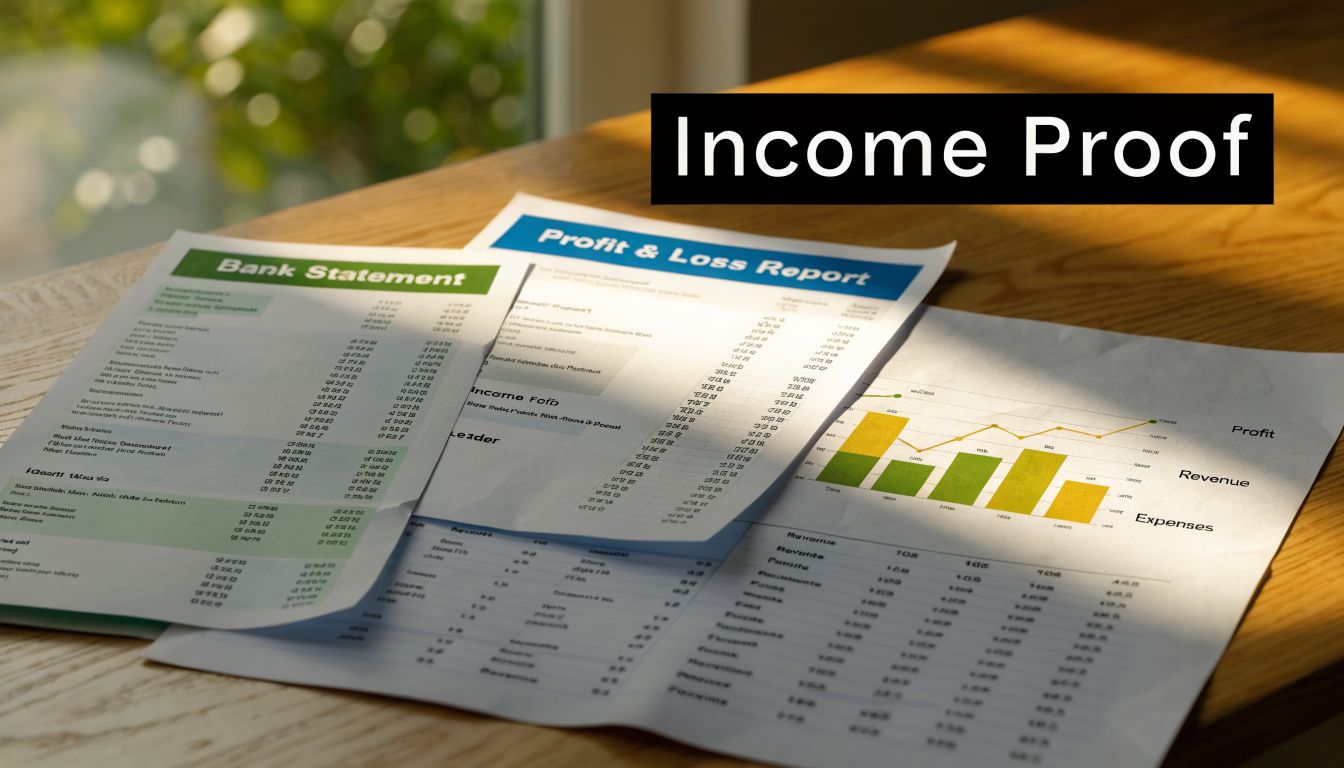
What courts review
Under Texas Family Code §§ 154.061 and 154.062, the court is trying to find net resources, not copy a line from a tax return. For a self-employed parent, that means the judge will often compare several categories of records at once and test whether they fit together.
In practice, courts look beyond one return because self-employment income moves. A good month, a bad quarter, accelerated deductions, delayed invoicing, or owner draws can distort the picture if you isolate a single period. Judges know that. They also know some businesses are seasonal and some owners run personal spending through the company.
That is why the evidence battle usually centers on a broader financial history, including the records discussed in this article on how Texas courts calculate self-employed income.
The records that carry the case
Some documents matter more than others.
Tax returns with all schedules
Start here, but do not stop here. Returns show what was reported to the IRS. They do not settle whether every deduction should reduce child support.Business and personal bank statements
These are often the strongest exhibits in the file. They show deposits, transfers, cash withdrawals, loan proceeds, and recurring payments that can confirm or undermine the story being told.1099s, invoices, and merchant processor records
These help trace gross receipts. If the books say one thing and Stripe, Square, Venmo, or customer payments say another, the court will notice.Profit and loss statements and general ledgers
These can be useful if they tie back to source documents. If they do not, they read like advocacy, not accounting.Loan applications and financial statements
A parent who told a bank he earns far more than he told the court has a credibility problem.Lifestyle evidence
Spending patterns matter. Large house payments, luxury vehicles, frequent travel, private school tuition, or recurring transfers to savings can support an argument that usable income is higher than claimed.
How lawyers prove or disprove income
The cleanest method is a bank deposit analysis. Add up deposits over time, remove transfers, loan proceeds, and other non-income items, then compare the result to reported revenue. If deposits consistently exceed reported income, the court may find hidden income or disallow parts of the claimed expense structure. If the deposit analysis tracks the books closely, it can protect the self-employed parent from an inflated support claim.
The second method is a forensic review of expenses. I look for personal charges buried in business categories. Vehicle payments. Family cell phone plans. Grocery purchases coded as meals. Travel with no business purpose. Those items may be deductible for tax reporting only after an accountant makes the call, but in child support court the question is simpler. Did this expense reduce the parent's ability to pay support, or did it benefit the parent personally?
The third method is lifestyle analysis. Used correctly, it is persuasive. Used sloppily, it sounds like character attack. The goal is to match spending to available income with documents, not speculation. If a parent says the company is barely staying alive but keeps making large discretionary purchases, that gap can support a higher income finding.
The $11,700 cap changes proof strategy
The new cap matters here because evidence near that line has outsized value. If the credible net-resource figure lands just under $11,700 per month, guideline support is one number. If the evidence pushes net resources over the cap, the baseline calculation changes, and the case may shift to whether the child has proven needs above guideline.
That is why I treat cases near the cap as records cases first and argument cases second. A disputed vehicle deduction, unexplained monthly transfers, or a pattern of cash withdrawals can move the calculation enough to change the presumptive support amount. In a close case, one well-prepared summary exhibit tied to bank statements and ledgers can matter more than a polished testimony outline.
What helps credibility, and what destroys it
Consistency wins.
If the return, bank records, invoices, and monthly spending all line up, the court is far more likely to accept the numbers. If the parent produces only summary spreadsheets, partial statements, or a last-minute profit and loss report with no backup, the judge may infer the missing records would not help.
Cash-heavy businesses create special problems. Restaurants, contractors, salons, mechanics, and small service companies often handle money in ways that leave gaps. A parent in that position needs a disciplined paper trail. Daily logs, deposit records, invoices, sales reports, and bookkeeping entries should match. If they do not, the other side will argue underreporting, and the court may agree.
Bring source documents, not just summaries. Judges trust records created during the ordinary course of business far more than explanations assembled for trial.
When imputation becomes the real danger
If a parent withholds records, mixes personal and business funds, or presents numbers the court finds unreliable, the judge may move from proving actual income to assigning income based on earning capacity and surrounding evidence. That can be a harsh result. It is also avoidable in many cases with better preparation early.
A forensic accountant is often worth the cost when the business is cash-based, expenses are heavily disputed, or one side suspects hidden revenue. In some cases, counsel also works with a CPA familiar with tracing and reconstruction, or with a litigation team that regularly handles net-resource disputes, including firms like Texas Child Support Law Office of Bryan Fagan for matters involving child support calculations, modification, and enforcement strategy.
Common Disputes and Strategic Considerations
The most contentious self-employment child support cases tend to revolve around the same recurring problems. The facts change, but the courtroom fights are familiar.

Personal spending dressed up as business expense
A contractor deducts vehicle costs through the business, but the truck is also the family vehicle. A consultant writes off travel, but part of the trip includes family time. A business card covers meals that look more personal than commercial.
Those facts don't automatically prove bad faith. They do create room for the other side to argue that business deductions are reducing taxable income without reducing actual ability to pay support.
If you're defending those expenses, bring backup. Show why the expense was necessary, how it was used, and why it wasn't a personal benefit. If you're challenging them, don't argue in generalities. Tie each disputed item to a statement, receipt category, or spending pattern.
Support above the guideline amount
When income is far above the cap, the next fight is whether the guideline number is enough. Texas Family Code §154.123 gives courts authority to deviate when the facts justify it.
Verified guidance on deviation notes that Texas courts may order above-guideline support when a self-employed parent's income significantly exceeds the $11,700 cap and the child's actual needs justify more, particularly where there is evidence of lifestyle disparity, luxury assets, or corporate-controlled expenses reducing taxable income, as described in this analysis of 2025 Texas child support guidelines and deviations.
A higher income by itself doesn't end the inquiry. The stronger argument is always the child's proven needs tied to the family's real standard of living.
That means receipts, school expenses, healthcare costs, activity costs, and evidence of how the child lived before separation usually matter more than broad complaints about wealth.
Multiple children and changing obligations
For business owners with children in more than one household, support can become a moving target. As each child ages out, the monthly obligation may step down. In a variable-income case, that can make negotiations and future planning more complicated than parents expect.
Many people make a mistake. They focus only on today's number and ignore how the order will function over time. If the business has cyclical income, or if family obligations will shift soon, the order should be drafted with that reality in mind.
Retroactive support and historical income
Retroactive support can be especially difficult when the parent is self-employed because the court must reconstruct past income from incomplete records.
A common scenario looks like this:
The custodial parent's argument
"He earned more than he disclosed for years, and the child should have benefited from that income."The obligor's response
"The business changed over time, records are uneven, and one good year shouldn't define the past."What usually helps the court
A timeline built from bank statements, returns, 1099s, and business records that shows how income moved.
The better chronology usually wins. A spreadsheet unsupported by source documents rarely does.
The 50 50 custody misunderstanding
Parents often assume equal possession means no child support. Texas law doesn't work that way automatically. In many shared-custody cases, support is still addressed through competing incomes and an offset-style analysis rather than a complete waiver.
The practical question is not, "Do we both have the child half the time?" The practical question is, "What support structure fits the parties' incomes and the child's needs under the order the court is entering?"
How to Modify or Enforce a Child Support Order
Self-employment income rarely stays still. A strong order at the time of divorce or suit affecting the parent-child relationship can become outdated quickly. That is why modification and enforcement practice matters so much in these cases.
When modification makes sense
A modification request usually turns on whether there has been a material and substantial change in circumstances. For a self-employed parent, that often means a real change in business income, not just a temporary fluctuation.
Examples that often trigger serious review include:
- A sustained revenue increase from expanded contracts, new clients, or a more profitable business model
- A major business decline after losing key work or closing a line of business
- A shift to non-traditional income streams, such as online sales or digital asset activity that now materially affects available income
Verified commentary has noted that expanding gig-economy work and non-traditional income sources such as crypto, digital assets, and e-commerce create new questions in modification cases, especially after the updated cap took effect on September 1, 2025, as discussed in this article on modifying child support in Texas.
How the process usually works
The procedure is straightforward, even if the financial proof isn't.
File a petition to modify or a motion to enforce
The filing must tell the court what change or violation is being claimed.Serve the other parent properly
If service is defective, the case can stall or fail.Exchange financial records
In a self-employment case, this often becomes the primary contest.Prepare for hearing
That means exhibits, summary charts, and witness testimony that can survive cross-examination.Obtain a written order with clear terms
Vague language creates future enforcement problems.
Enforcement against a self-employed parent
Enforcement can be more complicated when the obligor doesn't receive a standard paycheck. Wage withholding may still play a role in some cases, but it isn't always the clean solution it is for a salaried employee.
Other tools may be necessary, including:
- Contempt proceedings when an order was clear and payment wasn't made
- Bank account remedies or property-based collection efforts when funds are traceable
- Liens and other judgment enforcement tools depending on the facts and the order
The best enforcement cases are built before the hearing. Payment histories, bank records, prior orders, and proof of notice need to be organized early.
If you're defending an enforcement action, the focus is different. You need to know exactly what the order required, what was paid, what wasn't, and whether the alleged noncompliance can be disproved with records. General statements about business hardship don't carry much weight without documentation.
Your Action Plan and Resources in Major Texas Cities
If you're dealing with child support if parent is self employed texas, preparation beats improvisation every time. These cases are document-driven, and the side with the clearer financial story usually has the advantage.
Start with a simple plan.
Gather the right records
Pull together your tax returns, 1099s, profit-and-loss statements, business bank statements, personal bank statements, and any records showing how you pay personal expenses. If income fluctuates, organize the records in date order so the pattern is obvious.
Document the reality
If you're paying support, keep clean books and stop mixing personal and business spending. If you're receiving support and suspect underreporting, track inconsistencies between claimed income and actual lifestyle.
Get advice built for business-income cases
A self-employment child support case is not a standard paystub case. It requires legal analysis, financial organization, and often a strategy for handling discovery and hearing presentation. Parents in Houston, Dallas, Austin, San Antonio, and Fort Worth often face the same core issues, but local courtroom practice and judicial expectations can still affect how evidence should be presented.
A well-prepared case doesn't just ask the court for a fair number. It proves one.
Frequently Asked Questions About Self-Employment and Child Support
My income is seasonal. How will the court set a monthly number
Courts usually try to smooth out volatility rather than rely on one unusually good or bad stretch. In disputed self-employment cases, judges may review a broad financial window and average the income picture over time. That approach is why seasonal workers need complete records, not just a snapshot from the latest month.
I pay myself a small salary from my S-Corp. Is that all the court will use
Usually not if the broader evidence shows more money is available. In a self-employment case, the court may look beyond formal salary and evaluate business profitability, deposits, retained funds, and spending patterns. If your paycheck is low but the business supports your lifestyle, expect questions.
What happens if a parent refuses to provide records or reports suspiciously low income
Texas courts can impute income based on earning capacity when a self-employed parent underreports income or refuses documentation. Verified guidance notes that judges may use prior earnings, industry-average salaries, or lifestyle analysis to assign an income figure, even though the exact method is not prescribed, as discussed in this article on imputing income for a self-employed parent.
Can the court order my business to pay the other side's attorney fees
That depends on the procedural posture, the claims being made, and how the business and personal finances are structured. In practice, fee requests often turn on access to funds, disparity in resources, and the court's view of what is necessary to move the case forward. The better question is usually whether the evidence shows available resources, not whose name is on the account.
If you're facing a support dispute involving business income, fluctuating revenue, hidden cash flow issues, or a pending modification under the updated cap, Texas Child Support Law Office of Bryan Fagan handles Texas child support matters involving establishment, modification, enforcement, and contested net-resource calculations across Houston, Dallas, Austin, San Antonio, Fort Worth, and surrounding counties.