You're probably here because the case has started, bills haven't stopped, and you need a court order that makes the other parent contribute now, not at the end of a divorce or custody fight. That's exactly where a temporary child support order matters.
In Texas, waiting for the final order is a mistake if the child needs support today. A temporary child support order in Texas gives the court a way to set enforceable rules while the case is pending, and if you handle the hearing correctly, it can stabilize the situation fast.
What Is a Temporary Child Support Order in Texas
You file for divorce or custody on Monday. By Friday, daycare is due, the child needs health coverage, and the other parent has stopped helping. A temporary child support order gives the judge a way to set enforceable payment rules now, while the case is still pending.
In Texas, the court can issue temporary orders in a divorce or parent-child case under Texas Family Code §§ 6.502 and 105.001. In plain terms, this is the court's short-term operating order. It can require child support, address medical support, and work alongside temporary conservatorship and possession orders until the final order is signed. For the statutory framework, review the Texas Family Code provisions on temporary orders.
If your case involves custody, you are usually in a SAPCR, which means Suit Affecting the Parent-Child Relationship. The temporary child support order exists inside that pending case. You do not get one by asking informally. You get it by putting the issue in front of the court and showing why support needs to start immediately.

What the order actually does
A temporary child support order usually answers four practical questions:
- Who pays child support
- How much gets paid
- When payments start
- Who carries health insurance or reimburses medical expenses
It often shapes the rest of the case. Judges form early impressions at temporary orders hearings, and those impressions stick. If the temporary record shows one parent has steady income and the child has immediate needs, the court will expect a support structure that reflects that reality.
Do not confuse a temporary order with a Temporary Restraining Order. They are different tools. A TRO is designed to preserve the status quo and stop certain conduct until a hearing. Texas Law Help explains the difference in its guide to temporary orders and temporary restraining orders in Texas family law cases. If you need actual child support ordered, set a temporary orders hearing.
Why timing matters, especially for higher earners
For many families, temporary support is about immediate cash flow. For high-income earners, it is also about case strategy.
Texas will apply guideline child support using the statutory cap in effect when the court makes its ruling. Beginning September 1, 2025, that cap rises to $11,700 in monthly net resources. That change matters if your temporary orders hearing, reset hearing, or final trial could land before and after that date. A parent with income above the cap needs to pay attention early, because the timing of the hearing can affect the presumptive guideline amount and the arguments both sides make about needs, lifestyle, and any request above guideline support.
That is why you should gather income proof immediately. Pay stubs, tax returns, bonus records, 1099s, business records, and evidence tied to how Texas courts calculate net resources for child support belong in your preparation from the start, not the night before the hearing.
What to expect
A temporary child support order is enforceable once signed. It stays in place until the court changes it or the final orders replace it.
Treat this hearing seriously. If you walk in unprepared, you can end up living under a bad temporary order for months. In some courts, that temporary number becomes the baseline everyone argues from for the rest of the case.
How Courts Calculate Temporary Child Support
A temporary support hearing usually turns on one question. What number can each side prove with documents the judge trusts?
Texas courts start with the guideline formula in Texas Family Code §154.125. The judge takes the obligor's monthly net resources, applies the guideline percentage for the number of children, and then decides whether there is a legal reason to go above or below that amount. Temporary orders move fast, so the parent with cleaner math usually has the advantage.
Texas guideline percentages
| Number of Children | Percentage of Net Resources |
|---|---|
| 1 | 20% |
| 2 | 25% |
| 3 | 30% |
| 4 | 35% |
| 5 or more | up to 40% |
Start with net resources
Clients often walk in focused on gross salary. That is a mistake.
The court cares about net resources, which can include wages, salary, commissions, bonuses, overtime, self-employment income, rental income, and other sources recognized by the Family Code. If you need a practical breakdown, review how Texas courts calculate net resources for child support.
For a broader explanation of the formula, How Child Support Is Calculated in Texas explains how guideline support is built from those net-resource numbers.
How the guideline math works
The basic calculation is simple. If the paying parent has $10,000 in monthly net resources and there are two children, guideline support is 25%, or $2,500 per month.
The harder cases involve disputed income, irregular compensation, and high earnings. A parent paid through salary, bonus, K-1 income, contract work, or a closely held business should expect close scrutiny. Judges know income can be buried in business records, expense reimbursements, retained earnings, and selective deductions. If that is your situation, bring bank statements, tax returns, profit and loss statements, and proof tying deposits to actual income.
Why the 2025 cap increase matters in temporary cases
High-income earners need to pay attention to the calendar, not just the calculator.
Beginning September 1, 2025, the statutory cap for guideline child support rises to $11,700 in monthly net resources, as summarized in this overview of North Texas child support guidelines. That change can affect a temporary orders hearing set before that date, reset after that date, or tried near the transition. If your income is above the cap, timing can change the presumptive guideline amount and shape settlement pressure early in the case.
For one child, applying 20% to $11,700 produces a presumptive maximum guideline figure of $2,340 per month before any deviation analysis. That does not end the inquiry. A court can still hear evidence about the child's proven needs and decide whether support above guideline is justified.
Lower-income cases follow a different table
Texas also uses reduced guideline percentages in lower-income cases. For obligors with monthly net resources of $1,000 or less, the percentages are lower, as explained by Texas Law Help on child support and lower incomes.
That matters because parents sometimes assume the standard table always applies. It does not.
Bring the judge usable numbers. Pay stubs, tax returns, proof of health insurance cost, and reliable income records beat guesses every time.
The Step-by-Step Process to Get a Temporary Order
You file for divorce or a SAPCR. The other parent stops helping. Rent is due, daycare is due, and your temporary orders hearing may control the cash flow for months. That hearing is not a formality. It is your first real chance to set support, possession, and financial expectations while the case is still developing.
Start by treating temporary orders like a mini-trial.
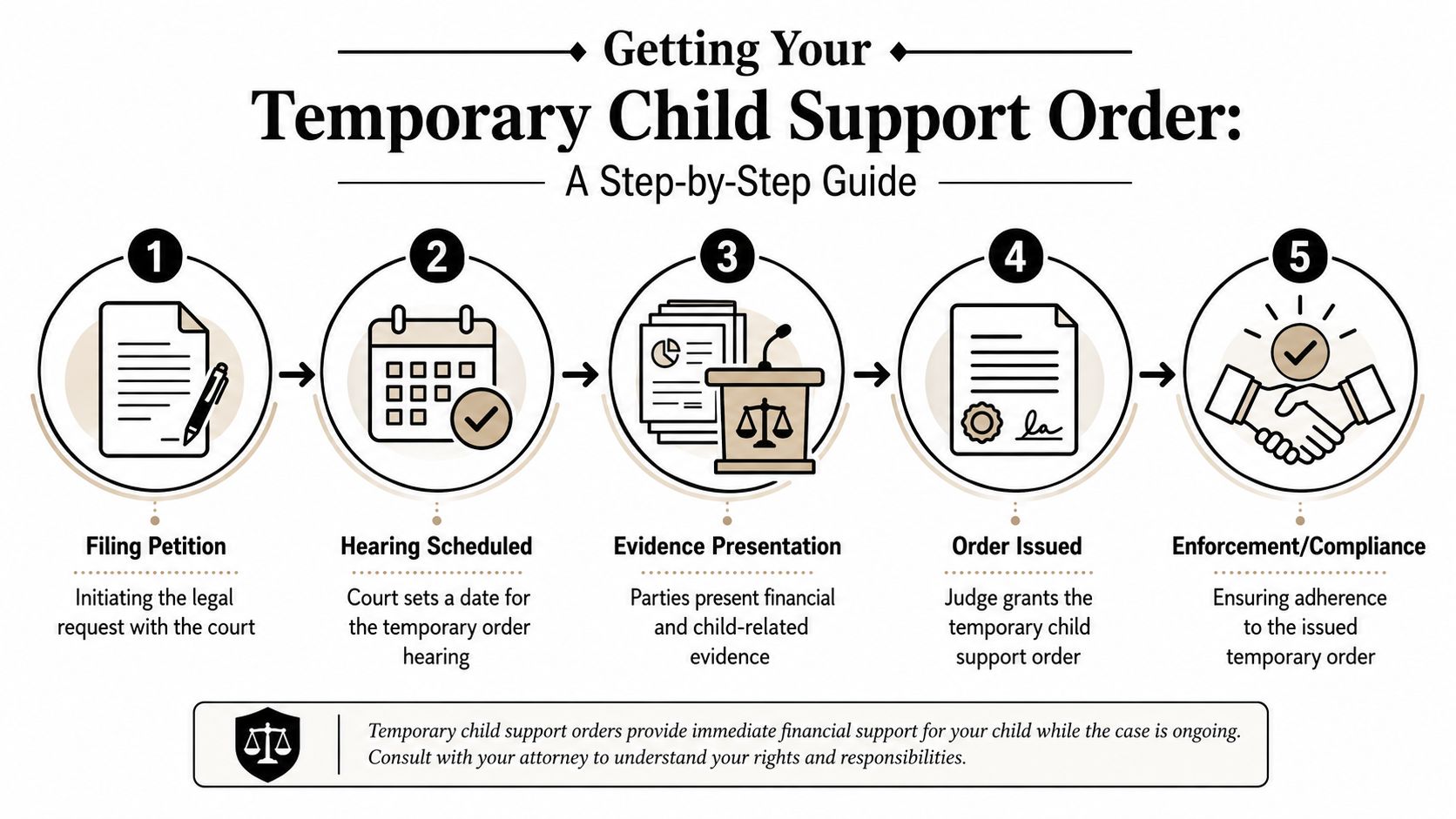
Step one through step three
File the main case
The court needs a pending divorce or SAPCR before it can sign temporary child support orders. No underlying case, no temporary relief.File a motion for temporary orders
Ask for what you need. Child support, medical support, health insurance, temporary conservatorship terms, and possession should be spelled out. Vague requests waste hearings.Get service and notice right
The other parent must be served properly and given notice of the hearing. If service is defective, the court may reset the hearing and you lose time.
If you need the filing sequence in plain English, start with this guide on how to file for child support in Texas.
Step four. Prepare the paperwork the judge will actually use
A lot of parents focus on the motion and ignore the forms and financial details that drive the ruling. That is a mistake. Courts expect usable income information, proposed terms, and enough detail to draft an order that can be signed that day.
Do not assume the judge will sort out missing numbers for you. Bring clean calculations, recent pay records, insurance cost information, and a proposed order. If your case involves a high earner, prepare the net resource evidence carefully and pay attention to hearing dates around September 1, 2025. A reset across that date can change the guideline cap analysis and shift settlement pressure early.
Judges act faster when the paperwork is organized, the math is clear, and the requested relief is specific.
Here's a short video that helps many parents understand the hearing dynamic before they walk into court:
Step five. Show up ready to prove your position
Temporary orders are evidence-driven. Bring documents, not complaints.
- Income proof: current pay stubs, recent tax returns, and records showing actual net resources
- Child expense proof: health insurance premiums for the child, daycare bills, recurring medical costs, and other documented needs
- Schedule proof: calendars, school records, pickup logs, and messages that show who is caring for the child day to day
- A proposed order: clear payment terms, start date, wage withholding language, and medical support terms
Expect the judge to look at the whole temporary arrangement, not child support in isolation. If one parent will have the child most of the time under the temporary schedule, the support ruling usually follows that reality. If the other side is understating income, raise it directly and back it up with records. If your case may remain pending into late 2025 and income is above the guideline cap, make timing part of your strategy, not an afterthought.
Advanced Issues in Temporary Child Support Cases
Your hearing is in August 2025. You earn well above the guideline cap. The case will probably still be pending after September 1. If you treat the temporary support hearing like a routine numbers exercise, you can hand the other side a stronger position for the rest of the case.
That is the strategic issue in advanced temporary child support cases. Timing can shape settlement pressure, arrearage exposure, and the judge's view of what support should look like while the case is pending.
One point deserves special attention. Texas is increasing the monthly net resources cap used in guideline child support calculations to $11,700 effective September 1, 2025, as noted in this analysis of Texas temporary child support orders. For high-income parents, that change can affect the temporary number, the negotiation range, and whether it makes sense to seek a reset after the effective date.
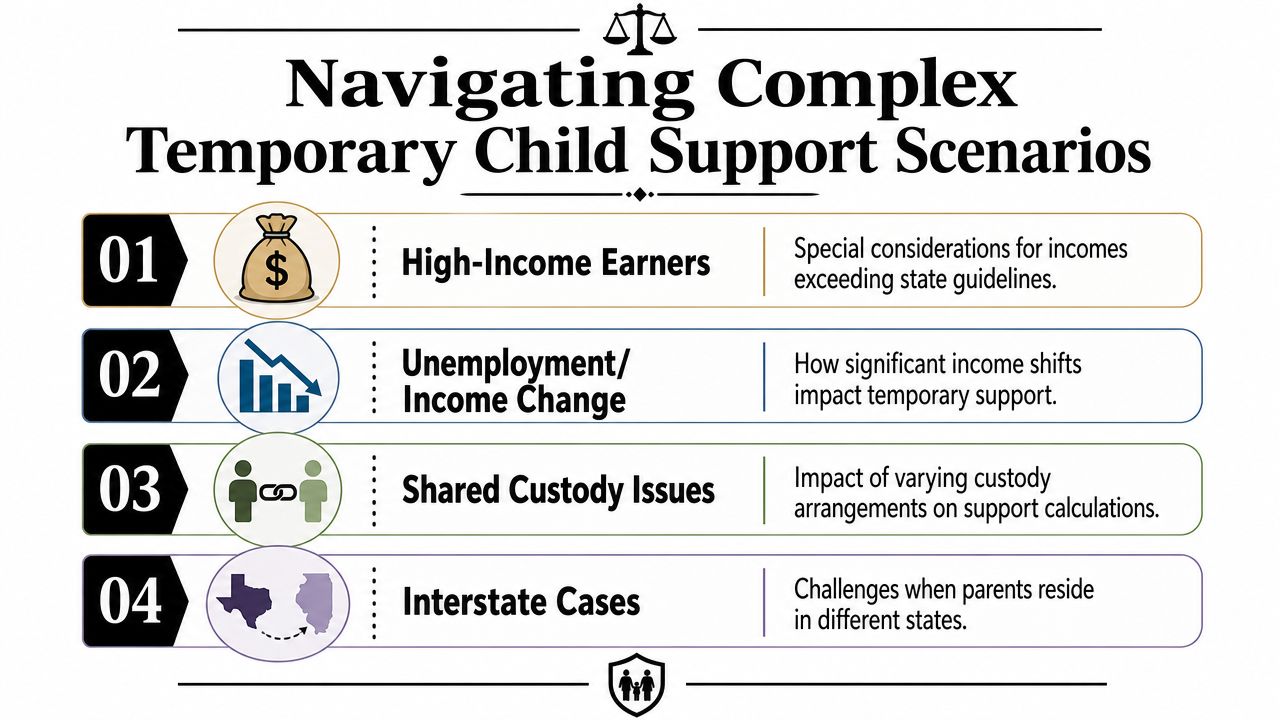
High-income earners and the 2025 cap change
If your income is above the cap, stop calling the hearing date a scheduling detail. It is a money issue.
A temporary order entered before September 1, 2025 may be based on the lower cap in effect on the hearing date. If the case stays alive after the new cap takes effect, either side may decide the old number no longer works. Paying parents need to assess whether an early hearing locks in a better temporary result. Receiving parents need to decide whether a later hearing, or a later request to revisit support, offers a greater advantage.
Do not assume the judge will fix this on the court's own initiative. Judges rule on the record presented. If the case may cross the September 2025 deadline, make that part of your hearing theme and your settlement strategy from day one.
Above-guideline support under Section 154.126
The guideline cap is not the end of the analysis. Under Texas Family Code §154.126, the court can order support above guideline levels if the child has proven additional needs. Read that phrase carefully. The need must be the child's, and it must be proven.
Good evidence includes invoices, treatment plans, tuition contracts, insurance summaries, and testimony that ties the expense directly to the child. Weak evidence includes general claims that the child is used to a certain lifestyle or that the other parent can afford more.
Many high-income cases are won or lost based on the strategies employed. The parent asking for more support often focuses on income. The smarter approach is to prove need with records and a clean monthly breakdown. The parent resisting above-guideline support should force that proof, line by line.
Shared custody claims and income fights
A claimed 50/50 schedule does not cancel child support. Texas courts still look at the temporary possession schedule that is being exercised, each parent's resources, and the statutory deviation factors in Texas Family Code §154.123, discussed in this explanation of §154.123 factors.
Expect sharp disputes over income in cases involving business owners, commission earners, cash-based work, and sudden unemployment. Temporary hearings move fast, so the judge often decides credibility from incomplete records. That is why bank statements, profit and loss reports, general ledgers, 1099s, and expense records matter so much. If your numbers are sloppy, the court may use a figure that is worse than the truth.
Parents with changing income should also think ahead. If the temporary amount becomes unrealistic after the order is signed, learn how to modify child support in Texas before arrears start piling up.
Temporary support litigation is won by the parent who treats timing, proof, and statutory standards as one strategy instead of three separate problems.
Contesting Modifying and Enforcing Your Order
You get a temporary child support order on Monday. By Friday, your income drops, the other parent refuses to follow the possession schedule, or the ordered amount was based on numbers that were flat wrong. Your next move matters. Follow the order as signed, or get back in front of the court fast. Do not stop paying because you are angry or because you think the judge got it wrong.
A temporary order is enforceable now. Miss payments and you can face contempt, attorney's fees, and serious pressure from the court to cure the default quickly. Judges have little patience for a parent who ignores a signed order and tries to explain later.

How to contest the amount
If the amount is wrong, attack the proof. Temporary hearings move fast, so bad numbers often survive unless someone forces the issue with documents.
Start with the basics. Was income calculated correctly? Were business expenses inflated or hidden? Did the other parent claim child-related costs without records? If the case involves a high earner, ask one more question. Does the court need to decide support under the current cap, or could this case still be pending after September 1, 2025, when the child support cap rises to $11,700 per month in net resources? That date matters. In the right case, it changes settlement value, hearing strategy, and whether either side should push for a quick ruling or delay.
Judges rule from what they can verify. Bring pay stubs, tax returns, bank records, profit and loss statements, and a clean summary that ties the numbers together. If you want a lower figure, prove it. If you want more than guideline support, prove the child's actual proven needs with receipts, invoices, and a sensible monthly breakdown.
When modification makes sense
Temporary orders can be changed, but only if you give the court a real reason. A meaningful drop in income, a job change, a major shift in the child's schedule, uncovered medical issues, or a mistake in the original financial picture can justify modification. Vague complaints will not.
File quickly. Delay turns a fixable problem into arrears.
If your case may cross the September 1, 2025 cap increase, treat timing as strategy, not housekeeping. A parent with income above the cap should evaluate whether an early resolution avoids a higher guideline ceiling. A parent seeking more support should consider whether waiting affects the range the court may use. That issue will matter most in upper-income cases, and many lawyers will miss it until the hearing is already set.
If you need the filing steps, this guide on how to modify child support in Texas explains the procedure and the evidence courts expect to see.
Enforcement is often the real fight
A good order on paper means nothing if nobody pays. If the other parent misses support, act immediately. Get a payment record, identify the exact missed amounts, and file an enforcement request that asks for specific relief.
Be precise. Courts enforce clear orders more easily than sloppy ones. If the order says support is due on a certain date and the payment history shows it was not made, that is the kind of record judges can act on.
Temporary support is not optional because the case is still pending. In many families, enforcement becomes the issue that decides whether the child has stability during the lawsuit. That is why I tell clients the same thing every time. Obey the order, document every payment, and if the terms no longer fit reality, get back to court before the problem gets expensive.
Frequently Asked Questions About Temporary Orders
How long does a temporary orders hearing usually last
A temporary orders hearing can be brief or can eat up most of a morning. It depends on the judge, the county, and whether the dispute is narrow or messy.
If child support is the only issue and both sides brought clean pay records, the court can move fast. If income is disputed, one parent is paid in cash, or someone is claiming unusual expenses without proof, expect a longer hearing and sharper questions from the bench. Show up with organized exhibits, current pay stubs, tax returns, and a clear proposed amount. Judges reward preparation.
Can I get temporary child support if I wasn't married to the other parent
Yes.
Marriage does not control this issue. A pending SAPCR does. If parentage is established or properly before the court, a Texas judge can enter temporary child support orders while the case is pending under Chapter 105 of the Texas Family Code.
What happens if we agree on temporary support
The court can sign an agreed temporary order, and that is often the smart move if the numbers are fair and the language is clear.
Do not sign just to get out of the courthouse. Temporary terms affect cash flow, insurance, reimbursement claims, and settlement pressure. In higher income cases, timing matters even more because a case that stretches past September 1, 2025 may raise the guideline ceiling to the new $11,700 monthly cap. If you are the paying parent, evaluate whether delay increases your exposure. If you are seeking support, consider whether waiting improves your position.
Does a temporary order control the final order
No, but it influences the final case more than many parents expect.
Judges watch what happens during the pending case. Who paid on time. Who followed the schedule. Who brought reliable financial records. A temporary arrangement that keeps the child stable can carry real weight later, even though the court is not required to copy it into the final order.
A temporary order does not decide the final result, but it often shapes the judge's view of credibility, stability, and whether either parent can be trusted to follow court orders.
Can support go above the guideline cap
Yes.
If the obligor's net monthly resources exceed the applicable cap, the court may order support above the guideline amount under Section 154.126 if the child has proven additional needs. You need evidence, not general complaints. Private school, specialized tutoring, recurring medical costs, therapy, or other specific expenses must be tied to the child and supported with records.
For high earners, pay close attention to the September 1, 2025 increase to a $11,700 monthly cap. If your temporary-orders fight or final hearing may land on either side of that date, build your strategy around it early. Waiting can change the guideline baseline the court starts from.
If I have equal time with the child, do I still pay support
Often, yes.
Texas does not use a simple equal-time rule that automatically wipes out child support. The court can still order one parent to pay based on income differences, who covers health insurance, and what the child needs in each home. Equal possession is a fact the court considers. It is not a free pass.
What if the other parent says they're unemployed
Challenge it immediately if the story does not make sense.
Courts can look at work history, education, prior earnings, available jobs, and whether the unemployment is voluntary. Bring documents that show earning capacity. Old tax returns, pay records, LinkedIn profiles, business filings, and text messages about side work can all matter. A judge may base temporary support on earning potential instead of a claimed zero income if the evidence supports that conclusion.
Secure Your Child's Future with Expert Guidance
Temporary child support orders solve an immediate problem. They put enforceable money and structure in place while the larger case moves through court. If you handle the hearing well, you protect the child's stability and reduce the chance that financial pressure will control the litigation.
The hard part isn't understanding that support is needed. The hard part is presenting the right evidence, using the right statutory framework, and dealing with strategic issues like net-resource disputes, §154.123 deviations, §154.126 above-guideline claims, and the September 1, 2025 cap increase for higher-income cases.
If you're preparing for court, keep your focus narrow and practical. Get your documents together. Know your requested terms. Base every support argument on admissible proof and the Texas Family Code. If the other side is hiding income, challenge it. If your circumstances changed, move to modify. If support isn't being paid, enforce the order.
For parents in Houston, Dallas, Austin, San Antonio, Fort Worth, and surrounding counties, Texas Child Support Law Office of Bryan Fagan is one option for legal help focused on establishing, modifying, enforcing, and defending child support orders under the Texas Family Code.
If you need help with a temporary child support order in Texas, talk with Texas Child Support Law Office of Bryan Fagan. The firm handles child support establishment, modification, enforcement, high-income cases, income disputes, and courtroom strategy for parents across Texas.